Executive Protection Isn't
a Man in Sunglasses.
Almost everything people believe about executive protection comes from film, and film has taught them to buy the wrong thing. The best detail you will ever be on is one where absolutely nothing happens, and that is not an accident.
The short answer
The short answer
Executive protection is really just risk management built around one person and how they move through their day. Most of the work happens before anyone arrives anywhere. It rests on four things: advance planning, treating transitions as the highest-risk moments, roles rather than headcount, and prevention rather than confrontation. And if none of the five trigger events is on your plate, you probably don't need a standing detail. Any provider pushing a permanent detail onto a one-time problem is selling, not protecting.
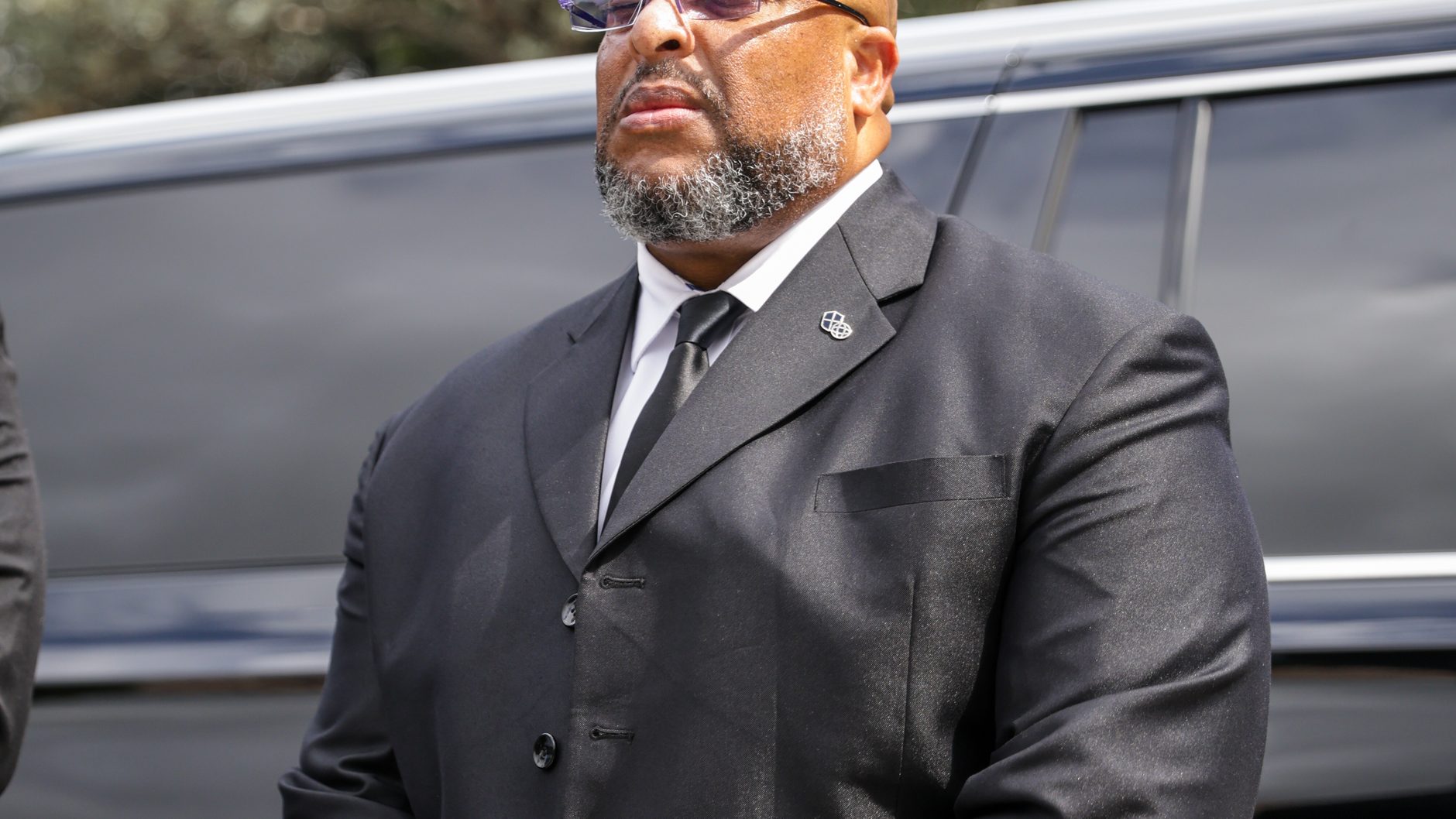
The Picture in Your Head
Is Costing You Money.
Not because it's dramatic, but because it's wrong in a very specific direction. It makes people buy size when they needed planning, and buy visibility when they needed the opposite.
"It's about the person's size"
An Agent's job is to make sure the situation never arrives. Judgment, planning and the ability to be invisible in a room matter far more than a physical presence, and an Agent who looks like a threat has already changed the room.
"More Agents means safer"
Planning beats headcount. Roles beat numbers. Six Agents with no advance work is a crowd. Two Agents who know the venue, the exits, the nearest hospital and the plan if something goes wrong is a detail.
"It's for celebrities"
It's mostly for physicians, executives, families, and people who have suddenly become interesting to somebody. It is far more often a two-week problem than a lifestyle, and the honest providers say so.
Strip the film away and the job gets much less exciting. It also gets much easier to buy correctly.
Executive protection is really just risk management
built around one person and how they move through their day.
Four Things,
and None of Them Are Dramatic.
Advance work
Five questions answered before they become emergencies. Where are the entrances, exits, and the exposed moments? Where is the nearest hospital? What do arrival and departure actually look like? Who else will be there? And what's the plan if something goes wrong?
Transitions
The highest-risk moments are the in-between ones. A thirty-second walk to a car gets treated as seriously as the two hours on either side of it, because that is where exposure actually lives.
Roles over headcount
A detail has defined roles: an Agent in Charge, a team lead, close protection Agents, advance Agents, a driver. The right question is never "how many?" It's "who does what, and has anyone planned this?"
Prevention over confrontation
Every good outcome in this work is something that didn't happen. If a detail ends with a story worth telling, several earlier things went wrong. The goal is a boring day.
You will never see the good version of this work, because the good version looks like a normal Tuesday. That is the hardest thing about selling it, and it is also the entire point of it.
Five Reasons People Call.
And One Reason Not To.
These are the situations where protection genuinely earns its cost. They are mostly temporary, and that is worth knowing before somebody quotes you a standing detail.
Saying that out loud costs us money more often than anything else we do. We keep saying it, because the alternative has a name.
A Twelve-Hour Rule
on a Glass of Wine.
People ask how you tell a real protective operation from an expensive-looking one. You almost never can, from the outside, on the day. What you can do is ask about the rules, because a company that has actually run details has written some very unglamorous ones down.
"Always an Agent, Never a Friend"
It's the name we give to the hardest discipline in this work. Rapport with a principal is useful and it is also a trap, because an Agent who has become a friend has quietly stopped being the person in the room whose only job is to notice. There's a companion idea we call the Word Budget: you only have so many words, and once you run out, you're done. An Agent who is talking is an Agent who is not watching.
Those rules exist because somebody, somewhere, learned them the hard way. Which is a decent test to apply to any provider you're considering.
The Detail Should Fit
the Actual Risk.
Details come in every size, and the size should be an output of the planning rather than an expression of how seriously somebody is taking you. Ours have run from a single Agent for an evening up to a six-Agent detail covering a statewide political campaign for six months. Both were sized to the work, and the small one was not a lesser job.
Why we turn work down
We have turned down tens of thousands of dollars of what is honestly best described as security theater: work whose purpose was to look protected rather than to be protected.
That isn't a shot at anybody without formal training, and it isn't a claim that we're the only serious operation in Florida. The problem was never the person. It's the pretending. A detail that exists to be seen is a detail that has stopped being about the principal.
Which means sometimes the honest recommendation is fewer Agents, or none at all, and a conversation about the actual problem instead.
What discretion actually costs us
We can't tell you most of what we've done, and that's the deal. Need-to-know is enforced. Agents sign non-disclosure agreements. Nothing about a client, a location or a movement goes anywhere near social media.
It makes this work almost impossible to market, which is a genuine commercial problem and the correct trade. A provider willing to sell a client's privacy for a marketing line has told you exactly what they'd do with yours.
"I cannot speak highly enough of Ardent Protection's executive protection services. They were incredibly thorough, ensuring the family felt safe and secure throughout our time with them. Their team was highly action-oriented, always one step ahead and ready to address any situation that arose."
Jackie Pilon · GoogleThat review isn't describing a rescue. It's describing a family who felt safe, and a team who was one step ahead, on a trip where nothing happened at all.
What People Ask
Quietly, and Usually Once.
How do I know if I actually need this?
Run the five triggers. A credible specific threat, a termination or dispute with genuine risk of violence, travel somewhere unfamiliar or higher-risk, a major appearance, or a situation that has suddenly raised someone's personal exposure. If none of those is on your plate, you probably don't need a standing detail, and we'll tell you that on the phone before you've spent anything. If one of them is, the useful next step is a conversation rather than a quote.
What does executive protection cost?
In Florida it commonly runs $75 to $125 an hour per Agent, and complex details price above that. The plus sign is deliberate rather than coy. Full ranges are on our Pricing page. What matters more than the rate is the sizing, because the difference between two Agents who planned and six who didn't is the whole job.
How much notice do you need?
Often within 24 hours, and we do it. A week's notice allows proper planning, and planning is most of what protection actually is, so a week buys you a meaningfully better detail rather than just a more relaxed one. If it's happening tomorrow, call anyway.
Will people know?
That's usually the real question, and it's a fair one. Discretion is the product. Agents dress to the environment, speak little, and are trained to be forgettable. Nothing goes on social media, need-to-know is enforced, and non-disclosure agreements are standard. The version of this work you've seen on television is optimized for the camera. The real version is optimized for you not being the story.
Most of the calls we take about this aren't about a threat. They're about a termination that somebody has a bad feeling about.
Written by the People
Who Work the Detail.
ARDENT Protection
A Florida security and protection company, licensed since 2020 (Florida Security Agency License #B1900411). We run Guard Services, Fire Watch, Event Security, Executive Protection and Workplace Violence Prevention across the state. We describe what protective work involves. We don't publish how it's done, and any provider who does is telling the wrong people something useful. Questions about anything here go to (954) 787-3700, and a person answers.
Security Support for a High-Risk Termination
The most common real reason anybody calls for protection, and the planning that makes the day look boring.
Read itWorkplace Violence Prevention: An Employer's Guide
The behavioral warning signs, the seven parts of a real plan, and where security's lane starts and stops.
Read itWhat Makes a Team Ready on Short Notice
If it's happening this week, this is what has to already exist behind whoever you call.
Read itNone of this needs deciding this week. Unless, of course, it does.
Tell Us What's Actually Happening.
Quietly, and in as much or as little detail as you want. We'll tell you honestly whether this is a protection problem, and when it isn't we'll say so, which costs us the job and saves you the money. Or call (954) 787-3700 and someone will pick up.