Home · Services · Executive Protection
Good Executive Protection Looks Completely Boring.
You're probably making this call for someone else. An executive, a principal, a spouse who would rather not discuss it. Executive Protection is risk management built around one person and how they move through their day, and the part that decides whether it works is the part you'll never see happen.
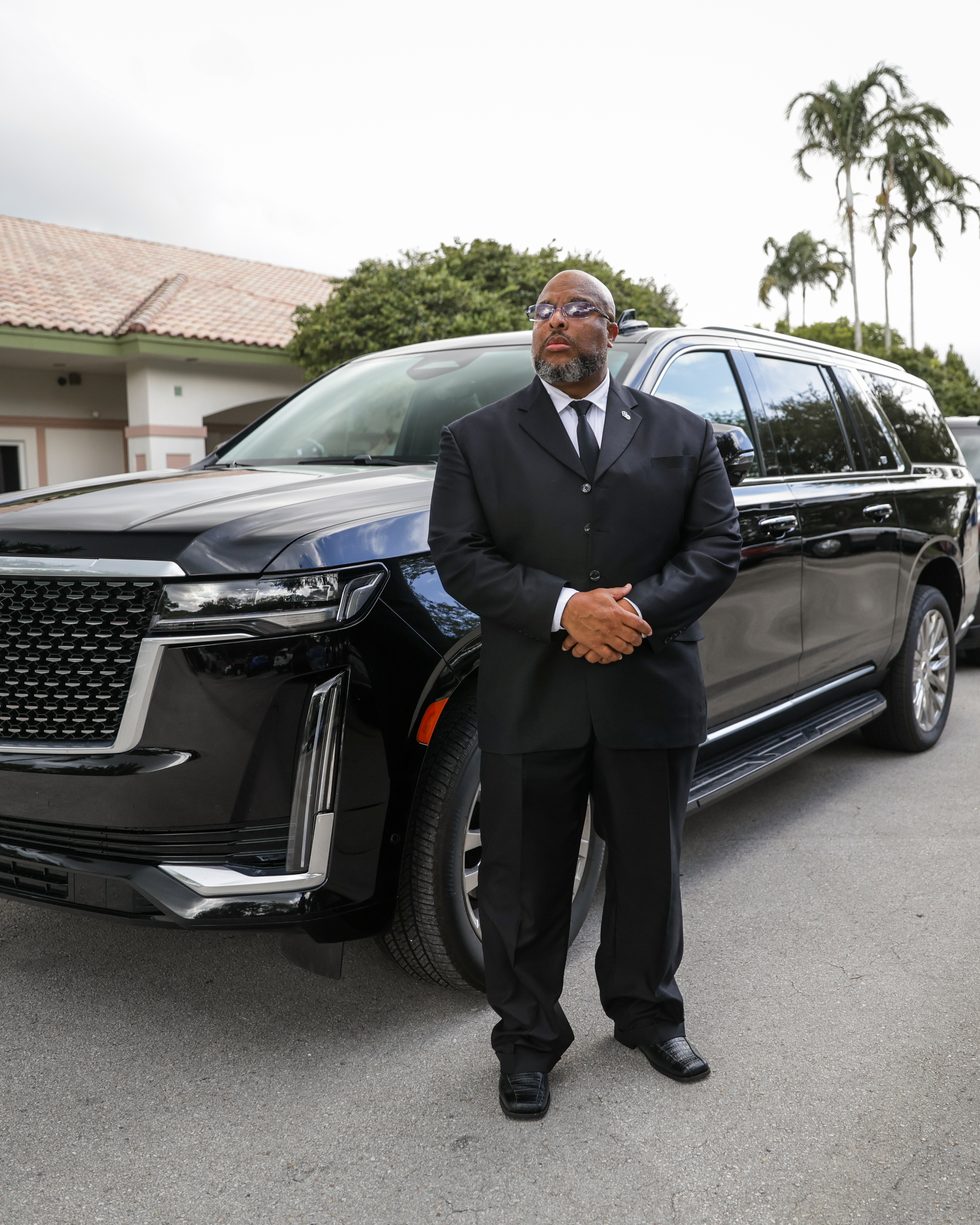
You're Probably Doing This for Someone Else.
The person who needs protection is rarely the person who dials. If that's you, you're also the one who'll have to explain the choice afterwards, and you may never have hired protection before.
The chief of staff, or the assistant
You book the travel and you hold the calendar, and now you're being asked to solve something that isn't on any calendar. You need to come back to your principal with an answer, not a brochure.
Counsel, HR, or the security lead
There's a specific person and a specific date. You want presence that lowers the temperature instead of raising it, and a provider who can say out loud where security's role stops and yours starts.
A spouse, or a family member
Something happened, and the person it happened to would rather not discuss it. Discretion here isn't a style choice. It's the condition of being allowed to help at all.
Whichever of those you are, you'll have to explain this decision to somebody. So we'd rather hand you something you can repeat than something you have to take on faith. Starting with what the money actually buys.
From the Outside, It Looks Like Standing Near Someone.
It isn't. You're paying for a person running a continuous read of a room they walked into three minutes ago, and catching the thing you wouldn't have seen. On a good day you see none of it, which is exactly what makes this work easy to underprice and easy to fake.
Executive Protection runs $75 to $125+ per Agent per hour. The ranges are published, so you can see what an honest number looks like before anybody quotes you one.
Risk and threat assessment
The routines, the travel, the exposure, and what actually changed to bring you here.
Advance work on every location
Someone goes first. Most of the value of this service lives inside that one step.
Protective movement and transitions
Arrivals, departures, and the thirty seconds in between that everyone else treats as travel time.
Secure transportation coordination
Routes, timing, drivers, and contingencies settled in advance instead of improvised on the day.
Emergency and medical planning
The nearest hospital identified for every stop, before anyone arrives at it.
Digital discretion
No posts, no check-ins, no photographs. Nothing that could be reverse-engineered into a pattern.
Sized to the real risk
One Agent, or a full detail. We'll tell you which, including when the smaller answer costs us money.
A person answers, at any hour
For as long as the engagement runs, and afterwards if you need us.

One of those does more work than all the others put together. Someone goes first.
Someone Goes First, and Answers Five Questions.
The part nobody sees is the part that does most of the job. Before the principal arrives anywhere, an Agent has already been there and answered these.

The advance. Hours of it happen before anyone is picked up, and nobody is ever there to watch it.
- 01
Which entrance and exit will actually be used, and what does the plan do about them?
- 02
Where is the nearest hospital and emergency service, for every stop on the day?
- 03
What do arrival and departure look like, minute by minute?
- 04
Who else will be in the room, and who has access to the space?
- 05
What happens if something goes wrong, so that nobody has to improvise it live?
A full advance happens days or weeks out. A hasty advance is the compressed version, usually finished in fifteen to thirty minutes before the team arrives. Both answer the same five questions. Only the clock is different, and a provider who can't tell you which one they're doing is doing neither.
The transitions are where the risk sits. A thirty-second walk to a car gets treated as seriously as the two hours of meetings around it.
The advance is also the easiest part of this work to quietly not do, because nobody is ever there to watch it happen. So it isn't left to anybody's judgment on the day.
Anyone can put an Agent next to a person. Everything that happens before that is the job.
The ARDENT Operating Standard, on a Detail.
The ARDENT Operating Standard is the name we give to five things that happen around every Officer and Agent we place. On protective work they look like this, whether it's one afternoon or six months.
Their routines, their movements, their real exposure. Written before the detail starts, not assembled around it afterwards.
Protective work is staffed by ERT Agents. Our Emergency Response Team is a standing bench of people kept ready for urgent and sensitive work, and the Agents on it are matched to the assignment rather than to whoever happened to be free.
Someone goes first, every time. This is the step that gets skipped, and it's where the risk actually comes out.
Clear, concise, complete, accurate. You hear what happened, including the part that didn't go to plan, and you hear it from us first.
As the risk falls, the detail falls with it. We won't keep billing you for a threat that's over.
A threat caught during advance work costs you a change of route. The same threat, missed until it acts, costs far more, and it may not be stoppable at all.
All of that assumes you need a detail in the first place. Plenty of the people who call us don't.
You Might Not Need a Detail at All.
There are companies selling Executive Protection who would like you on a standing detail. There are five situations where protection genuinely earns its place. If none of them describe your week, say so on the call, and we'll tell you what we think you actually need instead.
A credible, specific threat
Somebody has said something specific, about a specific person, and there's a record of it. Not a bad feeling. A thing you could hand to a lawyer.
A termination or dispute with real risk of violence
Usually that's a Workplace Violence Prevention job, sometimes with an Agent present. It is rarely a standing detail.
Travel somewhere unfamiliar or higher-risk
A trip into a place nobody on your team knows well, or one where the local picture is genuinely different from home.
A major appearance coming up
A public figure in your organization is about to be somewhere public, on a schedule that other people can read.
A sensitive situation that raised someone's exposure
A lawsuit, a story, a layoff, a public dispute. Something changed how visible a person is, or how visible their family is.
And if none of that is on your plate?
Then you probably don't need a standing detail, and we'll say so. A provider who pushes a permanent detail onto a one-time problem is selling, not protecting. If the honest answer is one Agent for one week, or advance work on a single trip, that's what we'll recommend, out loud, even though it costs us money.
Turning down work you don't need is the easy version of that. The harder version is turning down work you want, and would happily be paid for.
The request often arrives as a specification instead of a problem.
A big man. A suit. An earpiece.
We Don't Sell Theater.
The security industry taught people to buy protection by how it looks, because how it looks is the only thing anyone can check before the day it matters. That's the industry's doing, not the caller's.
So when the ask is a large man in a suit with an earpiece, we ask who the earpiece is talking to. Sometimes there isn't an answer, because the earpiece was the point.
There are companies who will sell you that, and sell it well. We've turned down tens of thousands of dollars of it.
Client Success, the team you'd call about anything at all, screens for it on the first conversation. We're not putting an Agent somewhere they aren't protecting anybody, and we'd rather lose the work than invoice you for a costume.
And to be exact about what we are not saying. This is not a shot at anyone without formal training. Street smarts carry people a very long way, and a person can recite every principle in this business and still be a poor protector. The problem isn't the person without the training. It's the person without it who pretends otherwise.
Which is the whole difficulty with buying this. You can't tell the difference by looking. Two Agents can wear the same suit, stand in the same place, and not be the same thing at all. It shows up on the day it has to work.
Something changed, and you're not sure what it warrants?
That's the right time to call. Before you're sure, not after.
We Run Our Own Advance, Whoever Else Is on the Ground.
Darryl Johnson was there for this one. At a public event where the Secret Service was present, they ran their advance and we ran ours. Same areas, same reasons. They kept pushing us further out.
They had their principal. We had ours, and ours wasn't where we were being moved to. Saying that out loud, on their ground, is not a comfortable thing to do.
They told us plainly that if anything happened, they had it. We didn't accept that, and we weren't going to. Not because they couldn't. Because a reassurance from somebody else's team is not a plan, and it isn't ours to rely on. We had a job. Nobody handed us permission to stop doing it.
A detail that folds the moment somebody with more authority leans on it isn't a detail. It's a costume. The test of a protective team is what it does when holding its position is the awkward option.
If we won't hand our job to the Secret Service on their word, we're not going to quietly hand it to anyone else on theirs. That's the same discipline that keeps your name out of our marketing.
"But they kept pushing us further out. And my protectee isn't over there. Imagine how complicated it is to say that to the Secret Service. They have all the authority in the world. But at some point, we had to hold the line."
"They directly told me, if anything happens, we've got it. I don't trust that. I still have a job to do."
Darryl Johnson · Founder & CEO
There's no client, no event, no year and no party attached to that story. There won't be one attached to yours either.
That's the standard when nobody is watching. The people who hired us are the only ones who can tell you whether it held.
What It Sounds Like When It's Over.
We don't name protective clients. So the proof we can hand you is the people who chose to say it themselves, in public, under their own names.
"I cannot speak highly enough of Ardent Protection's executive protection services. They were incredibly thorough, ensuring the family felt safe and secure throughout our time with them. Their team was highly action-oriented, always one step ahead and ready to address any situation that arose. Their ability to solve problems on the go was truly impressive, and we are so grateful for their dedication and professionalism."
"Outstanding service and very professional! We have our sons with them last night coming home from a party safely. Always updating their position and last call when they brought our sons back."
What a review can't show you is the part that stayed quiet. Most of what you pay for never becomes a story at all.
The Best Version of This Looks Like Nothing.
Which makes it very hard to judge from the outside. Inside a detail that's working, an Agent is holding to a rule that has a name: Always an Agent, Never a Friend.
The word budget
An Agent has a limited number of words with a principal, and once they're spent, they're spent. Four hours of comfortable silence beside somebody is a better outcome than a friendship. Closeness costs judgment, and judgment is the thing you actually hired.
The invisible save
The best outcome looks like this. An Agent notices a service door propped open that shouldn't be, closes it on the way past, and puts it in the log. It doesn't become a conversation. Nothing happens. That is the shape of most of what you're paying for, and you won't see it while it's happening.
The unglamorous rules
No eating in the detail vehicle. Personal phone use kept to a minimum. No alcohol within twelve hours of a shift, which is a stricter rule than the one commercial pilots work to. Restroom breaks planned during downtime rather than taken when they're needed.
If you're managing us, something is broken
Protection is supposed to take weight off you, not add to it. You shouldn't be scheduling Agents, mediating between them, or explaining the same situation twice. If any of that starts happening, it's worth saying so to whoever you hired, including if that's us.
Which only works if saying it is easy. So there is one number, and a person on the end of it.
One Number. A Person Answers.
You shouldn't have to chase your own protection team, and you shouldn't have to explain the situation twice.
Client Success
Your first call, about anything at all. We hire Client Success out of customer-service backgrounds rather than sales, because we want people who are good at solving a problem, not closing one.
Operations Leadership
The people running the detail. Agents, scheduling, changes to the plan, and anything happening right now.
Finance & Admin
Contracts, invoices, certificates of insurance, and whatever your procurement team needs. Handled quietly, like the rest of it.
Not sure who to call?
Call Client Success. It's what they're there for. They won't sell you anything and they won't pass you around. They'll either fix it themselves or walk you over to the person who can, and then stay on it until it's actually done.
That's the offer, and that's who you'd be talking to. Now the questions people ask before they're willing to believe any of it.
What People Ask Before They Hire.
These are worth putting to us, and worth putting to anyone else you're considering. The answers tend to differ.
What's the difference between an armed guard and Executive Protection?
More than a weapon. An armed Officer protects a place. Executive Protection protects a person, wherever that person goes, and the work is built on advance planning and judgment rather than a fixed post. If what you actually need is a stronger presence at one location, that's Guard Services, and we'll say so rather than sell you up.
We only need someone for a few hours. Is that a real job to you?
Yes. A single Agent for one afternoon is a real engagement. There's no hard minimum and no fixed contract term. It was written into the ARDENT Promise, the commitment Darryl Johnson wrote to clients before there was a company to hold to it: whether our contract terms are long or short. We'd rather do a small job properly than talk you into a bigger one.
What does it cost?
Executive Protection runs $75 to $125+ per Agent per hour. It's quoted rather than picked off a menu, because it depends on the movements, the duration, the risk, and how many Agents the situation genuinely warrants. The published ranges are on our Pricing page. What the rate buys is continuous assessment, not a large person standing near you.
Can one person cover this around the clock?
No, and anyone who tells you yes is selling you a number. One Agent covers a shift, not a day. Around-the-clock protection means a rotation of Agents, and it is the most expensive posture there is, so we will ask hard whether you actually need it. Usually the risk lives in specific movements rather than in every hour of the week, and the coverage should sit on those. When a situation genuinely does call for the full version, we run it: the longest one so far was a statewide detail, six Agents, six months. It was sized to the movements, not to a number somebody picked. Tell us what the days actually look like and we'll size it to that, out loud, including if the honest answer is smaller than you expected.
How fast can you start?
Often within 24 hours. A week's notice lets us do proper advance work, and advance work is where most of the value lives, so earlier is genuinely better. If it's urgent, call and we'll tell you honestly what we can put together tonight and what we'd be giving up by moving that fast.
Do you cover our area?
We cover Florida. Broward, Miami-Dade, Palm Beach, Hillsborough, Orange, and Duval are staffed, and so are other counties. On protective work the more useful question is where the principal is going, not where they start, because the detail travels with them. Tell us the itinerary.
Are you licensed and insured?
Yes. ARDENT holds Florida Security Agency License #B1900411 and carries insurance. You're welcome to ask us for both in writing, and to ask the same of anyone else you're considering. A serious provider hands them over without being chased for a week.
We're handling a termination and we're worried. Is this the right service?
Often it's Workplace Violence Prevention rather than a standing detail, and sometimes it's both. HR and leadership own the conversation and the decision. We bring presence, readiness, and calm, and we know exactly where our lane ends. A high-risk termination handled well looks almost anticlimactic, and that's the goal.
Most of what people call us about points somewhere other than a standing detail. That's because a person's exposure is rarely only at the door.
Three Things Worth Knowing Before You Hire Anyone.
Useful whether or not you ever call us, and just as useful with any provider you're considering.
What People Get Wrong About Executive Protection
The suit, the earpiece, the headcount, the muscle. Nearly everything people picture is the part that matters least, and the part that matters most is invisible.
Read itSecurity Support for a High-Risk Termination
If a difficult termination is what sent you looking, you may not need a standing detail at all. It explains what that situation actually calls for.
Read itWhat Readiness Actually Means on Short Notice
Be careful with anyone who promises you an exact arrival time before they know anything about your situation. It lays out what a real short-notice answer sounds like.
Read itNone of it requires a call. And if you'd rather skip all of it and just tell us what happened, that works too.
Tell Us What Happened.
You'll get a straight answer about the risk and about what it genuinely calls for, including when that's less than you were expecting. If you're in the middle of it right now, skip the form and call (954) 787-3700. Someone picks up, and you'll come off the call knowing more than you did going in, even if you end up hiring somebody else.