Security Should Be the Easiest Vendor on Your List.
You have a date that cannot move and a list of vendors to find, vet, hire, and manage. Event security isn't a pile of Officers you add at the end. It's a plan you build from the start, and it should be the one line on that list you get to stop thinking about.
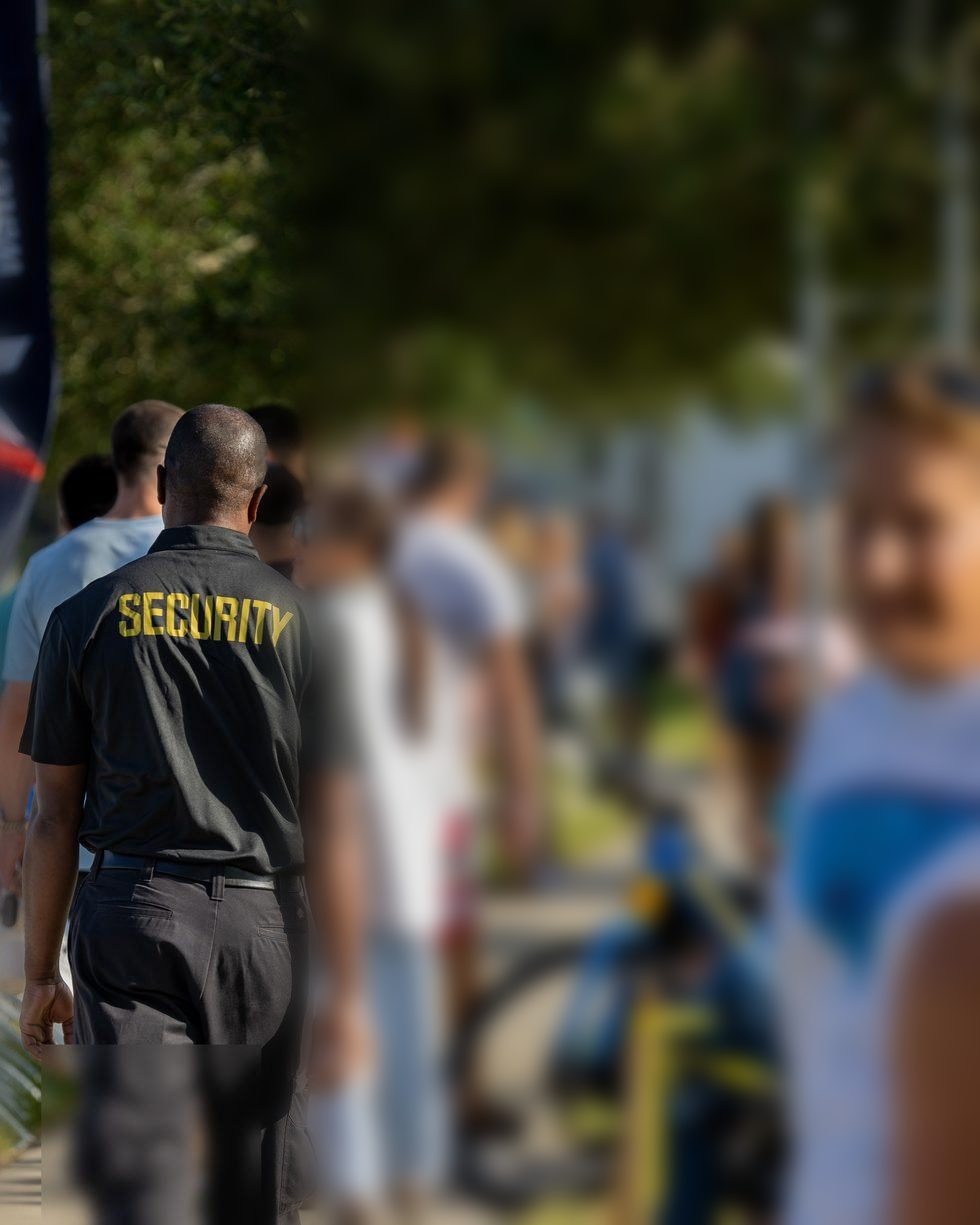
You're Quietly Balancing Two Fears.
Too heavy, and the celebration turns into a checkpoint. Too thin, and the one thing nobody planned for becomes the story of the night. The whole job is landing in the space between them, and that's our problem to solve, not yours.
Too heavy
Security that's cold and heavy-handed. Guests remember the line, the bag check, and the person who wouldn't let them through. Nobody remembers the band.
Too thin
Coverage so light it misses the one thing that turns a good night into a headline. It's almost always the thing that wasn't planned for.
Guests rarely notice good crowd management. They just leave saying the night felt easy. That feeling gets built weeks before anyone arrives.
Most of the Work Happens Before Your Doors Open.
Get the planning right and the day feels calm and easy.
Skip it, and no amount of day-of staffing can save you.
Risk and venue assessment
We walk the actual space. Entrances, exits, sightlines, choke points, where a crowd will bunch, where a vehicle can get close, and where the plan on paper falls apart in reality.
A plan built from a floor map alone is a guess. It's a fair thing to require of anyone you hire, including us.
Coverage sized to your event, not to a ratio
There's no magic number of Officers per hundred guests. Seven things set the number, and none of them fit on a price list. We'd rather size your night than sell you a headcount.
Access and credentialing
Guests, staff, vendors, contractors, talent, VIPs. Every one of them is a different door and a different check.
Access control is where security meets every single guest, which makes it the thing that sets the tone for the entire night.
Crowd flow, including the part that gets forgotten
Entry and exit are the riskiest moments of any event. Everyone plans the entry. Almost nobody plans the end of the night, when everyone leaves at once, some of them have been drinking, and the rideshares are all arriving in the same lane.
And most of what a trained team handles all night is friendly. The guest in the wrong corridor. The vendor at the wrong door. The person who's had one too many and just needs a chair and a glass of water. Those get sorted quietly, and the guest usually never knows they were part of it. Protecting the guest experience isn't a side effect of the work. It is the work.
A written emergency and evacuation plan
Medical, weather, evacuation, a lost child, an unruly guest, a threat. Who does what, who calls whom, where people go. Written down and briefed before the day, because deciding what to do about weather during a thunderstorm is too late.
For larger events it also means coordinating with local law enforcement and EMS ahead of time. That's a defined part of the job here, not business cards traded after something has already happened.
A pre-event briefing, at the venue
Officers who have already walked the space and seen the exits, the medical station, and the VIP area do better than Officers who show up at shift start and work it out on the fly.
Calm on event day is planning that happened earlier. There's no other way to buy it.
That's the plan behind the night. What it costs you to run it is a shorter list than most planners expect.
Standard on Every Event We Take.
Not an Add-On.
Worth holding this up against every quote you get. Which of these does a provider include, and which ones cost extra? The answer tells you what kind of company you're about to hire.
A list like that is easy enough for anyone to write down. What makes it true is the same standard we run on every job we take, whether it's one night or five years.
Start planning the day you book the venue.
Not the week of. We'll walk the space and give you a straight read on what it needs, including when that's less than you were quoted.
Anyone can put Officers at a door.
Everything that happens before the doors open is the job.
The ARDENT Operating Standard.
The ARDENT Operating Standard is the name we give to five things that happen around every Officer we place, on every job we take. At an event, it comes down to these.
A Plan for Your Venue
Written after we walk it, not from a floor map, and shared with you before the day.
Trained, Vetted Officers
Every ARDENT Officer completes 16 hours of ARDENT training on top of Florida's required 40-hour Class D certification, before they ever stand a post. Events with VIPs are staffed by ERT Agents, the side of our Emergency Response Team trained for sensitive work rather than general coverage.
A Named On-Site Lead
One person owns your event. You'll know exactly who to find, and so will your venue.
Briefed Before Doors
At the venue. Exits, medical station, VIP areas, the plan. Nobody works it out on the fly.
A Real Debrief After
Incident reports and a written review, as standard. Read for patterns, not filed.
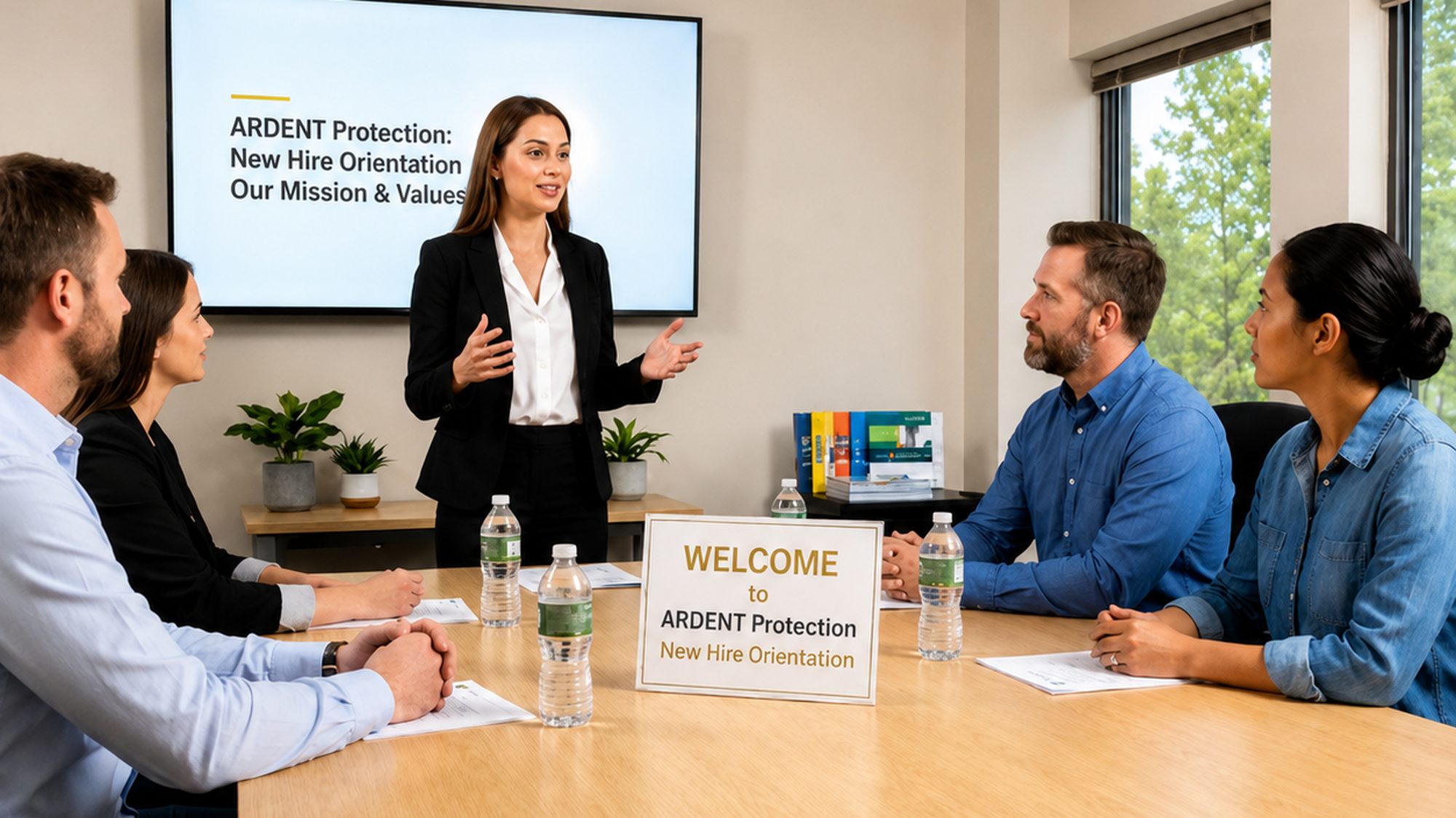
Most event problems aren't caused by a bad Officer. They're caused by a plan nobody wrote.
Five things, run the same way whether it's a wedding or a festival. Which still leaves the number every planner wants first.
"How Many Officers
Do I Actually Need?"
There's no ratio. Anyone who hands you one over the phone, before they know anything about your event, is quoting a headcount rather than building a plan. Seven things actually drive the number.
A hundred guests at a seated corporate dinner is a completely different job than a hundred guests at an outdoor party with an open bar and a single exit. Same number. Nothing else in common.
Private and public events aren't sized the same way either. A private event with a guest list can run on discreet coverage that blends into the room. A public event can't control who walks up, so it needs a real screening point and a heavier presence at the perimeter. Mixing the two up is how a wedding ends up feeling like a checkpoint, or a public event ends up thin at the one gate that mattered.
Coverage also needs margin. If your plan is sized so tightly that one medical incident pulls away the only Officer watching an entrance, that isn't a plan. It's a single point of failure.
Two honest things about us, while we're here. Over-staffing costs you money and changes the mood of the room, so we'll tell you when your event needs less than you were quoted, including when what it needs less of is us.
And our own short-notice work is worse than our own standard. A rushed timeline gets you coverage. It doesn't get you the full planning process, and the two aren't the same thing. We'll still take the call at 24 hours. We'd just rather have the walkthrough.
That's how the number gets built here. The more useful thing is being able to run the same test on anyone you're considering.
Six Things Any Provider
Should Ask You About.
These are the six we look for when we walk a venue, and they're the six anyone needs before they can size your event honestly. Tick the ones you already know about your night. Nothing is stored, nothing is sent anywhere, and nobody asks for your email.
These six are what any provider needs before they can size your event honestly. They're yours to use with anyone you're considering, including us.
You're welcome to take those six to any provider you're considering, and we'd rather you used them on us as well. The ones who plan will meet every line of it with specifics. The ones who don't will meet it with a number of people and an hourly rate, and leave the rest of it to the night. Either way you'll have learned something for free, and what we want you to end up with is a provider you can trust.
One of those six changes the shape of a night more than the others. It's the moment a name people recognize walks through the door.
Not a Wall of Large Men in Sunglasses.
People picture a wedge of security muscling a celebrity through a crowd. That image isn't just wrong, it's the opposite of good protection at an event, because it turns your VIP into a spectacle and draws every eye in the room to them.
Real VIP work at an event sits where the exposure actually is: arrival and departure. The rest of the night, a professional stays close, stays quiet, and stays boring. Those Agents come from our Emergency Response Team, and if the risk around a person is bigger than the event itself, that's Executive Protection, and we'll say so.
The measure of it working: the VIP barely thinks about their own security, and the other guests don't think about it at all.
That's what a night with us is supposed to feel like. The people it already felt like that for are easier to believe than we are.
From a Single Evening to a Recurring Venue.
"We are an outdoor wedding venue with lots of events and in need of professional security. From the first inquiry phone call until now Darryl (the owner) has been there to support our company with all it's security needs along the way. His security guards help enforce rules, end times, loading/unloading zones, and also are a great day of support. Him and his team have gone above and beyond at every job! Everyone on staff is detailed and professional."
"They sent Travis to us and he was beyond helpful. He showed up right on time and literally stayed until we were good to go. Highly recommend this company and Dara was great handling all the details for us."
"We had an event for 1200 people and the guards were exceptional. on time, well dressed and so good at their job!"
Neither of them is describing a rescue. They're describing an easy night, which is the entire product.
On Event Day You Cannot Afford
to Be Left on Hold.
The number one complaint in this industry is that nobody picks up. On the day of your event, that isn't an inconvenience. We organized ourselves into three teams so it never lands on you, and none of them are salespeople.
Client Success
Your first call, about anything at all. We hire Client Success out of customer-service backgrounds rather than sales, because we want people who are good at solving a problem, not closing one. If you don't know who to call, call them.
Operations Leadership
Your named on-site lead, the Officers, the plan, and any change to it on the day. Anything happening at your event right now.
Finance & Admin
Contracts, invoices, and the certificate of insurance your venue is going to ask for a week before the doors open. A real person, not a portal.
That's who'd be on the other end of it. Which leaves the questions planners ask before they'll book anyone.
The Questions Worth Putting to Any Event Provider.
Worth asking us, and worth asking anyone else you're considering. The answers tend to differ, and that's usually the whole story.
What does event security cost?
Event coverage commonly runs $25 to $40 an hour per Officer, and the total is quoted for your event rather than per guest. What moves it inside that range is the same seven things that set the Officer count: headcount and peaks, the venue, alcohol, hours, VIPs, the crowd, and the risk. Full ranges for every service are on our Pricing page. Tell us what the night looks like and we'll price the actual event, including when it's smaller than you expected.
What is your minimum?
There isn't one. No fixed contract minimum, no minimum number of Officers, and single shifts are fine. A Saturday night with two Officers is a real job and we treat it like one. If a provider tells you your event is too small to bother with, that's a fact about them, not about your event.
Can you do something smaller than a concert?
Yes, and most of what we staff is exactly that. A corporate mixer. A private party. A pool deck over a holiday weekend. A venue with one door to watch. The planning scales down, it doesn't disappear, so we'd still walk the space and still write the plan. If you're not sure your event is even the kind of thing we cover, describe it to us in two minutes on the phone. That conversation is free and it isn't a pitch.
Do you cover my area?
We serve all of Florida, with local teams in Broward, Miami-Dade, Palm Beach, Hillsborough, Orange, and Duval counties. If your venue is somewhere else in the state, call us. We very likely cover it, and we'll tell you plainly if we don't.
Are you licensed and insured?
Yes. ARDENT holds Florida Security Agency License #B1900411, and every Officer is individually licensed by the state under Chapter 493. Your venue will almost certainly ask for a certificate of insurance before it lets anyone work the door, and our Finance and Admin team sends it directly to whoever needs it. It's a fair thing to ask of any provider before you sign, and any provider who gets cagey about it has answered the question.
How fast can you start?
We can staff an event on as little as 24 hours' notice when a plan falls through or a decision lands late. Three to four days is when the planning genuinely gets good, and the day you book the venue is better still. We won't race anyone to a number, though. A rushed timeline gets you coverage, it doesn't get you the full planning process, and any provider who promises an exact arrival time before they know anything about your venue is selling, not scoping.
Armed or unarmed for an event?
Armed coverage isn't an upgrade you add to feel safer. It's a risk decision, and most events are unarmed. The useful question isn't "would armed feel more secure?" It's "what specific risk at this event would an armed Officer address that a well-run unarmed team could not?" Being armed does not expand what an Officer is legally allowed to do. An Officer, armed or not, has the same authority to detain as any private citizen, and any use of force is governed by state law and limited to what is reasonable and necessary. We'll tell you honestly which one your event needs, including when the answer is unarmed.
Do you handle VIPs and talent?
Yes. Events with VIPs or elevated risk are staffed with ERT Agents, the side of our Emergency Response Team trained for sensitive work, rather than general event coverage. When the risk sits around the person rather than the event, that's Executive Protection, and it's a different job with a different plan. And no, it doesn't look like a wall of large men in sunglasses. That image is the opposite of good protection, because it turns your VIP into a spectacle.
Event coverage answers the night. It doesn't answer the venue on all the other days, and that's a different job.
Three Things Worth Knowing
Before You Book Anyone.
Useful whether or not you ever call us, and just as useful with any provider you're considering, including one that isn't us.
The Event Security Planning Guide
The whole sequence, from the venue walk to the load-out, in the order a planner actually hits it. Including the two moments that carry most of the risk and get the least attention.
Read itQuestions to Ask an Event Security Provider
The short list, and what a good answer sounds like next to a vague one. How quickly the answers come back tends to tell you more than the answers do.
Read itWhat Short-Notice Coverage Can and Can't Do
Coverage on 24 hours' notice is real, and it isn't the same as a planned event. What you still get, what you give up, and how to protect the parts that matter most.
Read itNone of it requires a call. And if you'd rather skip the reading and just tell us about the event, that works too.
Tell Us About the Event.
The venue, the headcount, the hours, and what's worrying you. We'll walk the space and give you a straight read on what it actually needs, including if that's fewer Officers than you were quoted elsewhere. Or call (954) 787-3700 and someone will pick up. Either way, you'll come off the call knowing more than you did going in, even if you book somebody else.